
The enterprise software market is facing a quiet efficiency crisis when it comes to predictable enterprise revenue. Traditional outbound sales are failing. Spending months blasting generic cold emails to unvetted lists doesn’t just waste time—it ruins your domain reputation and alienates the exact decision-makers you want to win over.
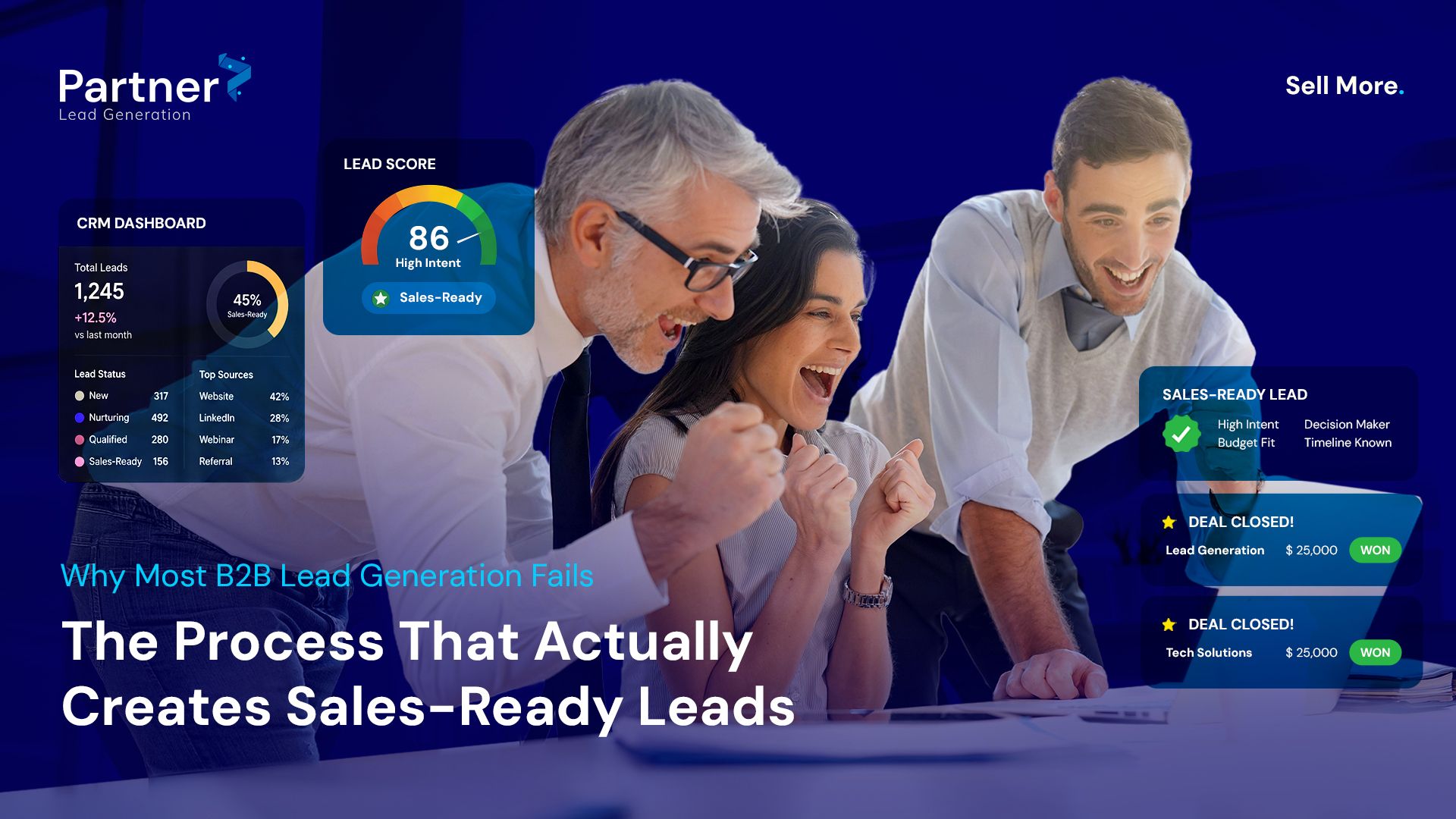
The data is clear: up to 80% of marketing-generated leads never convert into sales. Enterprise sales cycles drag on for 9 to 20 months, while buying committees now average 8 to 13 distinct stakeholders.
This gridlock happens because traditional strategies focus on top-of-funnel lead volume rather than pipeline velocity. Inbound setups aren’t much better; on average, only 2% of website traffic fills out a form, leaving 98% of potential buyers completely anonymous.
To break this deadlock, modern revenue teams are moving to ecosystem-led growth. By using shared partner networks and real-time behavioral data, companies can bypass gatekeepers and secure warm, high-intent paths to decision-makers. Strategic platforms like partnerleadgeneration.com act as the operational hub for this shift, linking data silos, automating account mapping, and aligning partner marketing to turn raw signals into predictable pipeline.
The Mathematics of Pipeline Velocity
Enterprise growth is a mathematical function of velocity, not a numbers game. Packing a CRM with low-intent leads dilutes sales focus, drops win rates, and drags out the sales cycle. To find the true health of a revenue engine, companies must track Pipeline Velocity, the rate at which an active pipeline generates revenue per day.
Structuring outbound efforts around partner-supported intent data optimizes all four variables simultaneously. Opportunities from partner ecosystems are pre-qualified and carry built-in trust. When partners co-sell, deals are 46% more likely to close, average contract values (ACVs) jump by 48%, and win rates improve by 53%.
| Pipeline Variable | Traditional Outbound Model | Ecosystem-Led Sales Model | Operational Delta |
| Opportunities | Unvetted lists based on broad demographics | Signal-layered account mapping and shared data | Higher-fidelity targets with documented interest |
| Average Deal Size | Standard transactional software pricing | Multi-product, partner-integrated solutions | 48% increase in average contract value |
| Win Rate | Baseline win rates of 15% to 25% | Co-sold deals supported by trusted partners | 53% increase in conversion-to-close rate |
| Sales Cycle | 9 to 20 months of cold discovery | Compressed timelines via warm introductions | 27% to 46% reduction in cycle length |
| Customer Churn Rate | High early-stage churn from poor product-fit | Compounding switching costs via integrated tools | 58% lower churn rate for integrated buyers |
This model is a major growth driver across the industry. Shopify’s app ecosystem drove 32% of all new merchant acquisitions in 2025, and Lumen Technologies projects that 40% of its mid-market bookings will be partner-driven by 2026.
Signal-Layered Targeting: Real-Time Intent
Traditional lead scoring is too slow. Systems that rely on static demographic data or a single white paper download fail to capture actual purchasing timing. Instead, high-performing teams use signal-layered qualification to prioritize outreach based on three intent tiers:
- First-Party Intent: Tracking direct, anonymous interactions with your website. Multiple stakeholders from the same company repeatedly visiting high-intent pages (like pricing or API documentation) indicates an active buying window.
- Second-Party Intent: Sourced from close partner networks and review sites. This tracks when a target account compares your software on G2 or Capterra, or browses your listing in a partner’s app marketplace.
- Third-Party Intent: Web-wide research trends across external publisher networks alongside corporate trigger events like executive changes, hiring surges, or fresh funding rounds.
Layering these signals gives outbound teams a massive advantage. Instead of cold scripts, reps can deploy timed, contextual outreach. This approach yields an 18% reply rate, compared to the 3.43% industry average for static cold email.
Overcoming the “Last-Mile” Challenge
The biggest barrier to ecosystem-led growth is manual sales labor. An account executive (AE) usually has to manually check partner maps, find overlaps, and track down partner reps to ask for introductions.
To solve this, companies use Agent-Led Growth (ALG) and virtual enablement. Organizations deploy specialized Virtual Assistants (VAs) and automated pipelines to handle administrative tasks like partner onboarding, CRM data hygiene (in Capsule or HubSpot), and automated email campaign setup.
By offloading backend management to outsourced support and platforms like partnerleadgeneration.com, companies can scale co-marketing plays easily. This leaves senior sales reps free to focus purely on high-value closing conversations.
Executing the “Nearbound Surround” Playbook
The core of a partner-led sales strategy is the Nearbound Surround play. Instead of forcing access to a target account, sellers leverage the pre-existing trust of partners who are already embedded with the buyer. This playbook relies on the 3 I’s of Nearbound Sales:
- Intel: Gathering internal context (budgets, blockers, timelines) directly from partner reps.
- Intro: Securing warm introductions from trusted partners to start the conversation with established credibility.
- Influence: Aligning with partners throughout the sales cycle to reinforce product value and navigate internal approval gates.
By integrating ecosystem tools with tools like Gong, Crossbeam, and Clay, GTM leaders can sync this intelligence directly into custom CRM objects to track deal progression.
A Collaborative Marketing Architecture
Modern enterprise buyers expect high-value, educational resources tailored to their operational challenges. To meet this need efficiently, use the Maximum Content Leverage Model: transform every successful partner or customer case study into a library of LinkedIn snippets, short videos, and testimonial-driven landing pages.
To capture early-stage research traffic, teams must also optimize for Generative Engine Optimization (GEO). Because enterprise buyers increasingly use AI assistants like ChatGPT, Claude, and Google AI Overviews to research software, brands must structure their web content with clear headings, bulleted definitions, and verifiable facts to ensure they are cited by AI engines during the research loop.
Five-Step Implementation Roadmap
- Ecosystem Mapping: Map your target accounts against your partners’ databases using clean-room platforms like Crossbeam to find your highest-value account overlaps.
- RevOps Infrastructure: Connect partner data directly to your CRM (Salesforce or HubSpot) so reps can easily view shared opportunities within their daily workflows.
- Deploy Virtual Support: Outsource the administrative tasks of partner management to virtual assistants or platforms like partnerleadgeneration.com to handle data updates and campaign setup.
- Enable the Field: Train your AEs and SDRs to use partner data as a standard step in their prospecting, and align sales compensation to reward partner-influenced deals.
- Measure and Scale: Track partner-sourced pipeline, win-rate shifts, and sales cycle compression to continuously optimize your co-marketing investments.
Stop Chasing Ghosts. Start Closing Signals.
The market got quieter. Buyers didn’t disappear; they changed how they bought. While others spray volume and hope, winners move on timing, intent, and precision.
At Partner Lead Generation, we build signal-driven growth engines that help you find the right buyers before your competitors do.