The Great Sales Development Divergence of 2026
The rise of autonomous AI sales agents has pushed the B2B sales development landscape into a massive reality check. We have officially moved past the initial wave of artificial intelligence hype and entered a period of pragmatic, human-in-the-loop orchestration.
When generative AI tools first flooded the market, revenue leaders assumed that autonomous AI sales development representatives (SDRs) could completely replace human teams. This sparked an unprecedented wave of fully automated blast campaigns.
By early 2026, operational reality hit back. Managed autonomous AI SDR contracts faced a massive 50% to 70% cancellation rate. Enterprises quickly realized that while software could spin up massive top-of-funnel noise, it simultaneously tanked downstream conversion rates. The end result? A much higher cost per closed-won deal.
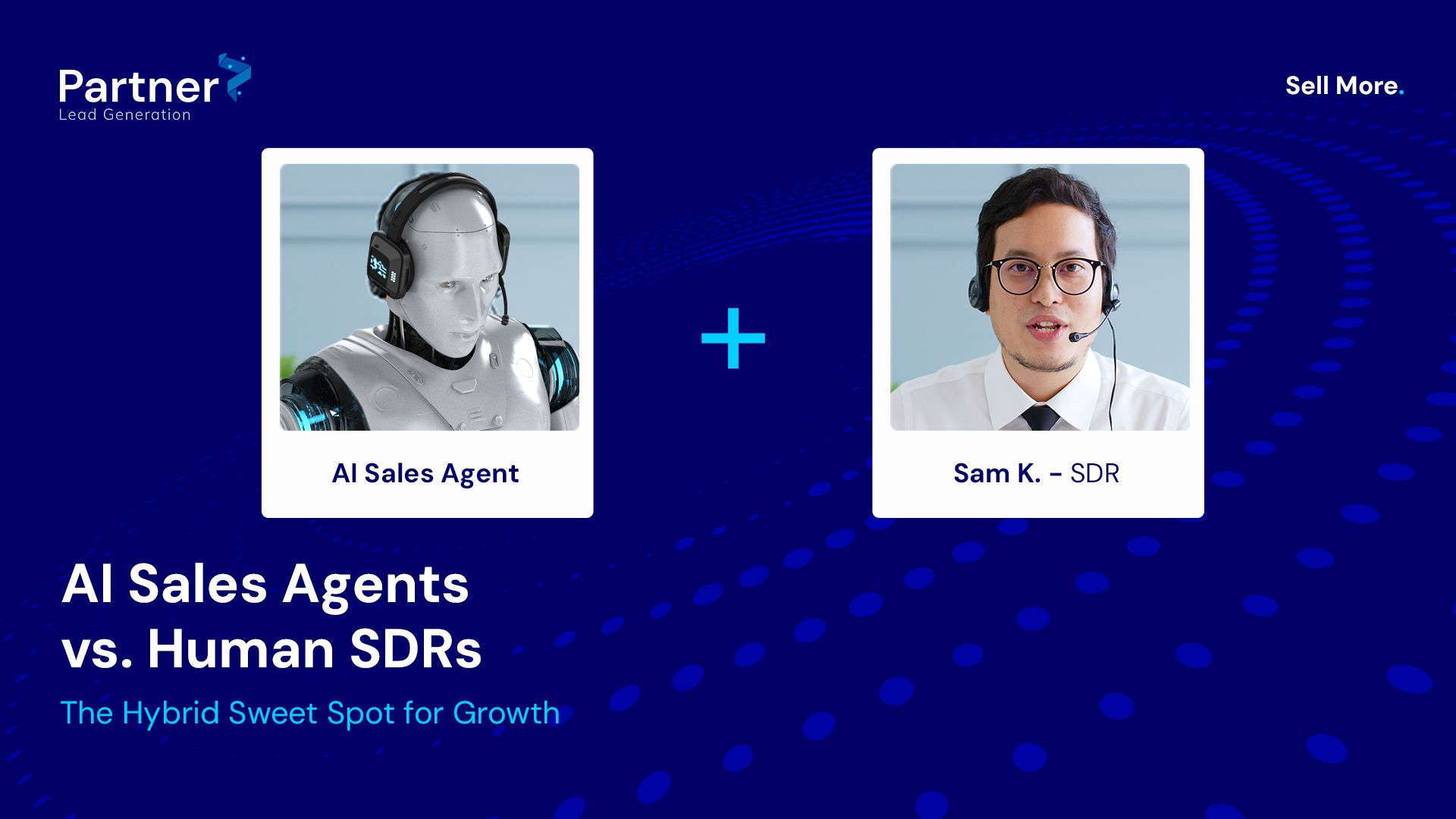
Instead of firing their humans, high-performing Go-To-Market (GTM) organizations are shifting to a hybrid framework—a model heavily championed by partnerleadgeneration.com. This setup deploys autonomous AI agents to handle the grunt work of data enrichment, signal tracking, and rapid qualification, while keeping human SDRs on the front lines to manage complex negotiations, counter objections, and build actual trust.
This alignment is incredibly critical in channel partner lead generation, where fluctuating partner motivation and fragmented systems typically lead to erratic, unpredictable pipelines.
The True Economics: Out of the Sandbox, Into the Funnel
You cannot accurately compare a human rep to an automated software platform by looking at a base salary versus a software license fee. You have to look at the fully loaded Total Cost of Ownership (TCO) and downstream pipeline velocity.
A human SDR brings overhead like commissions, benefits, tech stacks, and management time. On the flip side, an AI SDR setup requires software subscriptions, dedicated cold email infrastructure, premium data tools, and fractional human oversight.
The real game is won or lost based on how efficiently a booked meeting actually turns into revenue. Here is how the three dominant GTM operating models stack up in the current market:
| Operational Metric | Human-Only SDR | Autonomous AI-Only | Hybrid SDR Pod |
| Fully Loaded Annual TCO | $103k to $158k | $18.6k to $72.6k | $60k to $120k |
| Meetings Booked / Month | 12 to 20 | 15 to 40 | 30 to 50 |
| Average Cost / Meeting | $425 to $1,083 | $39 to $403 | $120 to $400 |
| Average Meeting Show Rate | 60% to 70% | 45% to 55% | 65% to 75% |
| Meeting-to-Opportunity | 25% to 35% | 15% to 25% | 30% to 40% |
| Downstream Conversion | Moderate | Low (1.5x costlier per deal) | Optimized / Highest |
While an AI can book a meeting for dirt cheap, running it completely solo is a financial trap. To fix this gap, modern revenue teams divide tasks based on who (or what) does them best across key operational pillars:
- Outreach Scale: AI wins easily, blasting 500 to 2,000 hyper-personalized emails daily while humans top out around 50 to 100.
- The Trust Factor: Humans win. Buyers are getting incredibly good at spotting synthetic personalization. This is why pure human outreach still pulls a 5% to 12% reply rate, while pure AI trails at 3% to 8%.
- Speed to Lead: AI wins. Bots can qualify and respond to an inbound form fill within seconds, radically improving conversion velocity.
- Bespoke Selling: Humans win. Reading between the lines during discovery, understanding internal corporate politics, and handling complex, non-scripted enterprise objections requires human emotional intelligence.
Why Pure AI Fails to Close Deals
The reason autonomous AI contracts are getting canceled left and right comes down to a glaring conversion deficit that occurs the second a meeting hits the calendar.
An experienced human SDR generally converts 25% of initial bookings into real pipeline opportunities. Pure AI bookings convert at just 15%. Why? Because autonomous bots are notoriously bad at filtering out low-intent prospects who only agree to a call just to stop an automated email sequence.
This qualification gap forces Account Executives (AEs) to waste valuable hours acting as spam filters. When you calculate the cost of lost AE time and cratering close rates, a pure AI model is actually 1.5x more expensive per closed deal than a hybrid team.
Data from recent market trials confirms the friction: human-backed outreach yields a 71% meeting show rate, while pure AI invites drop to 52%. Trust is the absolute baseline for enterprise software and services, and synthetic interactions simply cannot build it alone.
Fixing the Channel Partner Bottleneck
Channel partnerships are a brilliant growth lever, but they frequently turn into operational bottlenecks. Most companies give partners static marketing decks and hope for the best. This fails because it expects busy partners—who are buried in renewal cycles and customer support—to act as their own outbound SDR teams. They simply don’t have the time or the infrastructure.
To build a predictable channel, you have to take the prospecting burden off the partner. Instead of offering “collateral,” you need to offer a centralized pipeline engine.
The standard operational setup is a hybrid pod consisting of one human SDR managing roughly 2 to 3 AI SDR seats. This pod uses automated systems to ingest data, monitor real-time intent signals (like leadership changes or technology shifts), and trigger contextual outreach.
The Escalation Playbook
To keep bots from hallucinating or making promises you can’t keep, successful hybrid teams use strict handoff rules. An AI agent runs the top-of-funnel machine, but a human must instantly step in if a prospect replies with questions regarding:
- Specific custom pricing or contract terms.
- Complex security architectures or compliance protocols.
- Direct competitor comparisons.
- Any response that exceeds 80 words (a massive buying signal).
By handling the data digging and initial messaging via AI, human reps save 5 to 10 hours a week, freeing them up to focus entirely on talking to prospects and prepping AEs.
The 5-Step Execution Blueprint for Channels
To implement this repeatable pipeline engine for a partner network, partnerleadgeneration.com lays out a clear, five-step framework:
- Kill the Fluff: Ditch top-of-funnel awareness content. Rebuild partner assets around high-intent calls to action, like custom tech walk-throughs or specialized audits.
- Clean the Data: Use advanced multi-tool workflows like Clay or Skrapp to clean target lists before launching outreach. Dirty data kills domain reputations instantly.
- Trigger on Signals: Don’t send boring cold blasts. Program your AI layer to trigger outreach based on real-world events—like funding rounds, executive turnover, or active tech lookups.
- Low-Friction Events: Host targeted virtual workshops alongside your partners. Let the AI handle the automated follow-up and attendee tracking, routing hot leads straight to local partner reps.
- Track What Matters: Stop staring at email open rates. Focus your RevOps dashboards on revenue metrics: Cost Per Qualified Meeting, Meeting Show Rate, and Partner-Sourced Pipeline Value.
Summary for Revenue Leaders
Relying entirely on manual outreach restricts your growth. Leaving AI to run completely automated campaigns destroys your brand reputation and pipeline health.
The path forward is structural. Build centralized hybrid pods to scale your outreach volume, enforce bulletproof human handoff rules to protect the buyer experience, and deliver pre-qualified meetings directly to your partners. That is how you turn sales development into a predictable revenue driver.
Stop Chasing Ghosts. Start Closing Signals.
The market got quieter. Buyers didn’t disappear, they changed how they buy. While others spray volume and hope, winners move on timing, intent, and precision.
At Partner Lead Generation, we build signal-driven growth engines that help you find the right buyers before your competitors do.